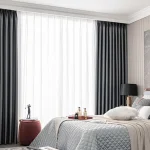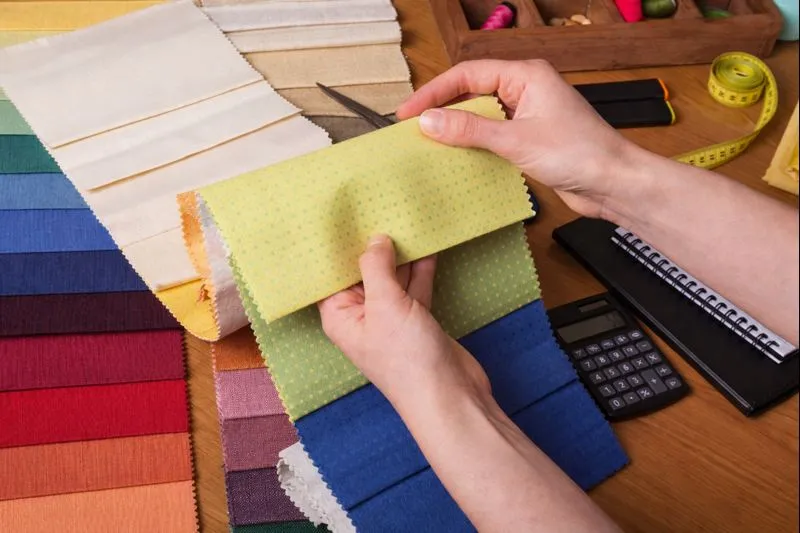
Curtains are the ultimate choice for each window if you want a sleek, elegant, and luxurious look. Whether you want a sleek, minimal, or layered look, curtains are the endgame. But, there is one thing that you should consider while buying curtains — their fabric type. Fabric plays an important role in creating the vibe of your space. Every curtain looks beautiful at first, but is it the material that makes them truly suitable for your space? This is what this guide by Omni Home is all about. We are going to provide you with different curtain fabrics that will help you choose the right one.
11 Curtain Fabrics For A Beautiful & Practical Window Treatment
Here is a detailed list of the 11 most sought-after and in-demand curtain fabric types. We also described how they affect the ambiance and vibe of your space.
1. Silk Curtains
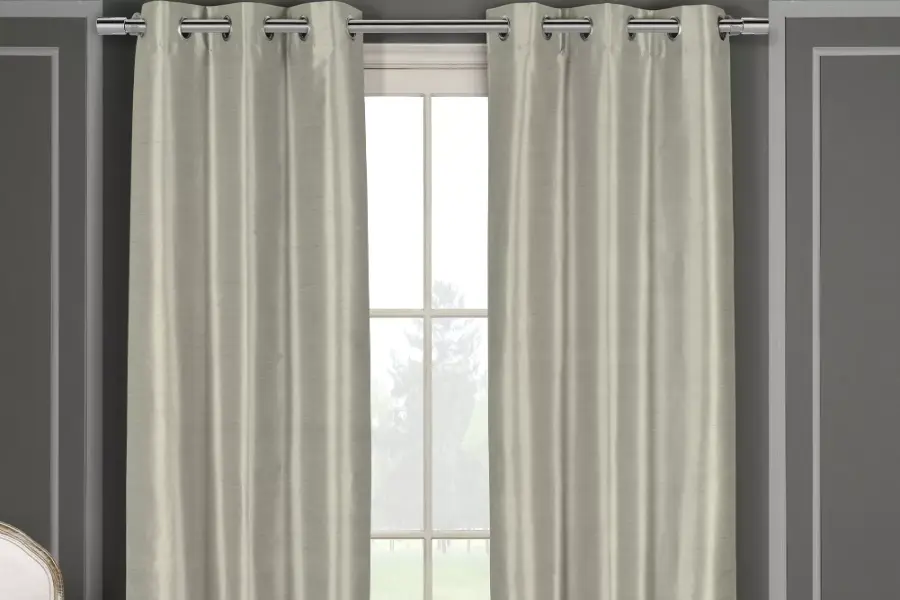
Silk is considered the most delicate and luxurious fabric that can be used for curtains. This fabric has a soft, glossy, and slippery texture that is best for creating a royal and regal look. These curtains have a long and fluid look. If you want a palace-like look in your space, these silky wave curtains are a way to go. The length of the curtains also plays a vital role in vibe-building. Floor-to-ceiling curtains look way more sophisticated and sleek.
2. Velvet Curtain Fabric
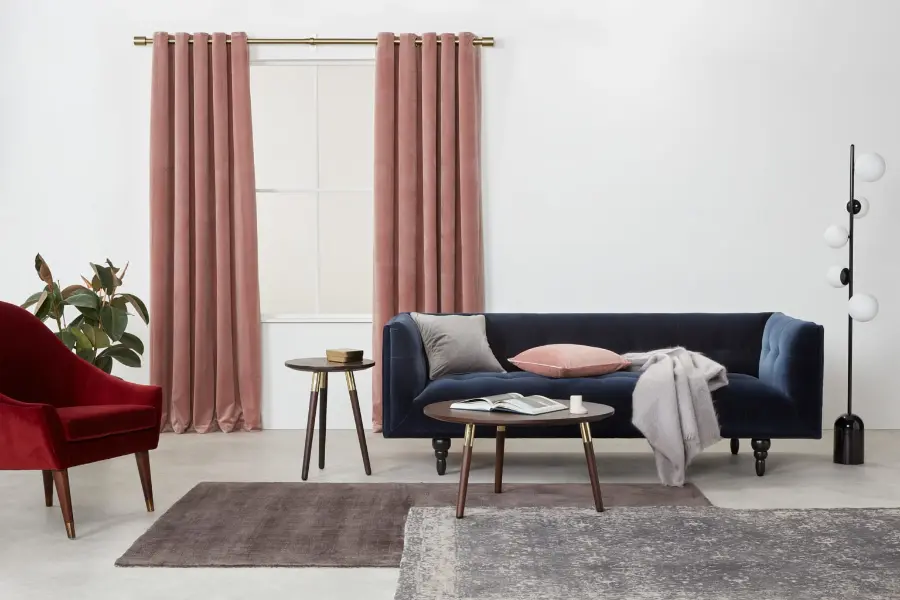
Velvet drapes in a space bring warmth, coziness, and luxury. Their appearance is rich, lustrous, and glossy, checking all the boxes for luxe draping. The secret to pairing the velvet curtains successfully is to consider the nap and the surface texture of these curtains. Always pair velvet blackout curtains with the curtain rods that have a metallic accent, as they would accentuate the
3. Suede Fabric For Curtains
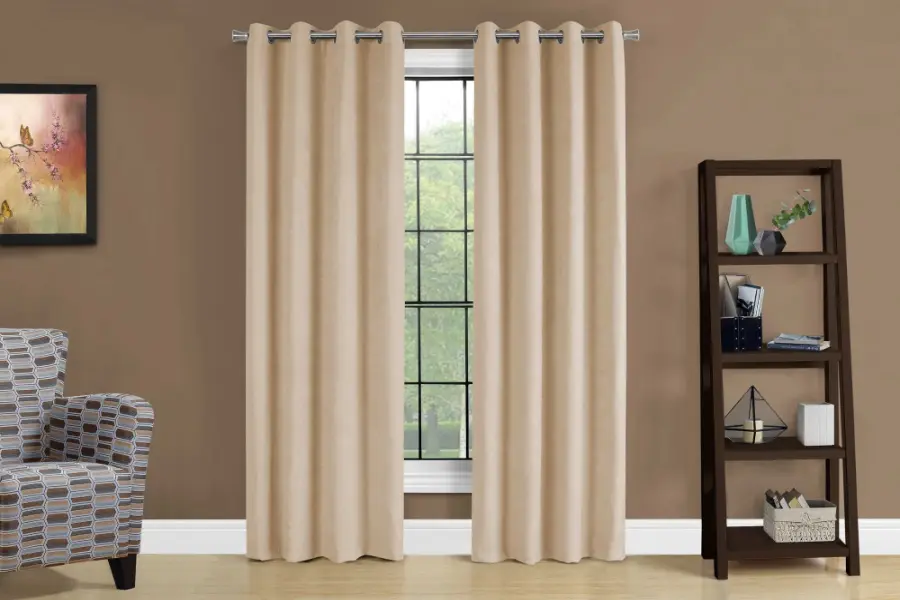
Suede is another luxury fabric that is used for the manufacturing of curtains. These curtains would bring a soft, classic, and rich-textured look to your space. Suede drapes have a substantial weight that allows a heavy and beautiful fall, mostly suitable for the office. Moreover, these office drapes also offer complete control over privacy with their light-blocking feature. Lastly, these drapes are easy to clean as their surface doesn’t allow dust settle.
4. Voile Curtains
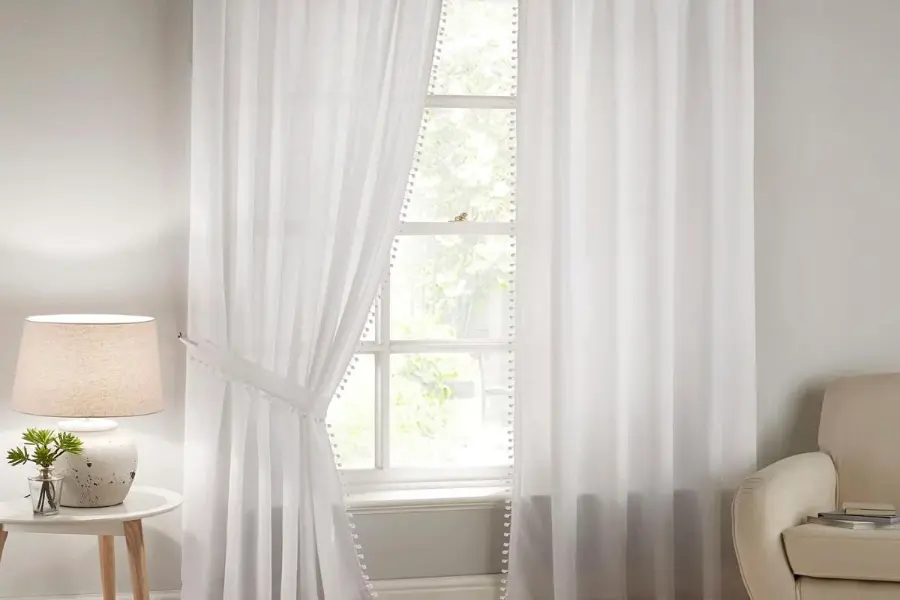
These curtains are also a type of sheer curtain. They are semi-transparent and diffuse the harsh sunlight into a radiant glow, illuminating your space beautifully. These drapes are a modern alterative of the net or lace curtains. They have a delicate, yet strong weave that traps any allergens and microorganisms in their weave and keeps a healthy air quality index indoors.
5. Cotton And Linen Blends For Curtains
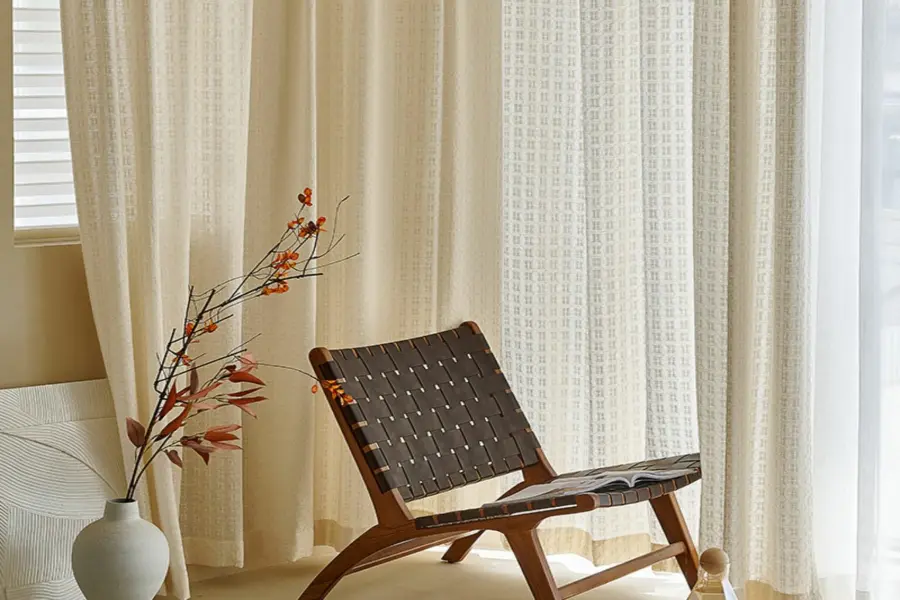
Cotton and linen blends are the most modern and the most commonly used fabrics for curtains. Their beautiful and elegant texture makes any space more comfortable, warmer, and inviting. These cotton and linen curtains are beautifully fluid, along with being a little crisp. These fabrics are not just modern and beautiful, but also affordable and versatile. They turn any boring space into a beautiful haven with their inexpensive, luxurious look.
6. Organic Hemp Curtains
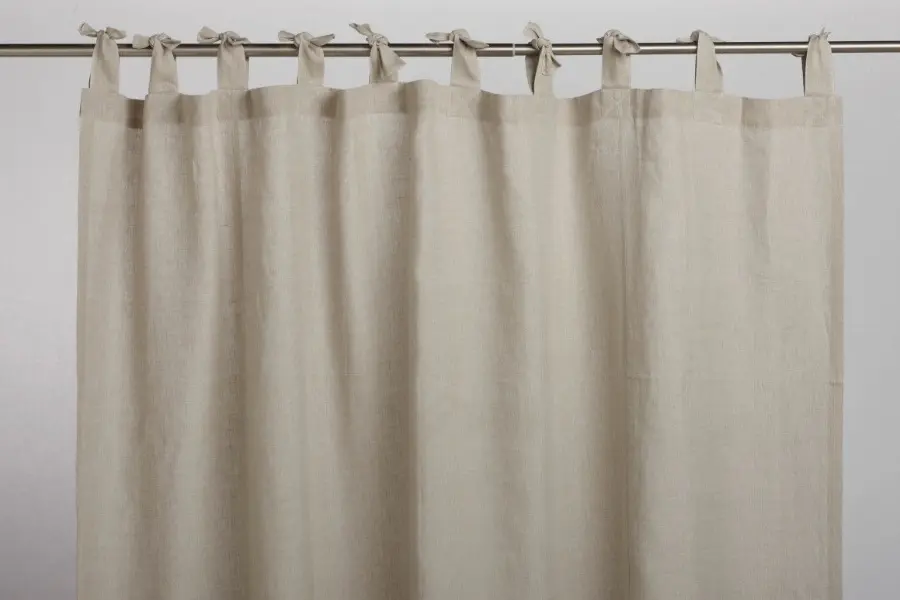
If you want a biodegradable and sustainable option for your curtains, organic hemp is the solution. These curtains are made from natural materials and maintain a higher air quality index in your space. Moreover, these curtains feel cooler in the summer due to their natural origin and their ability to absorb excessive heat and prevent it from entering your space. Their appearance offers a natural, warm, elegant, and textural appearance.
7. Rayon Curtains
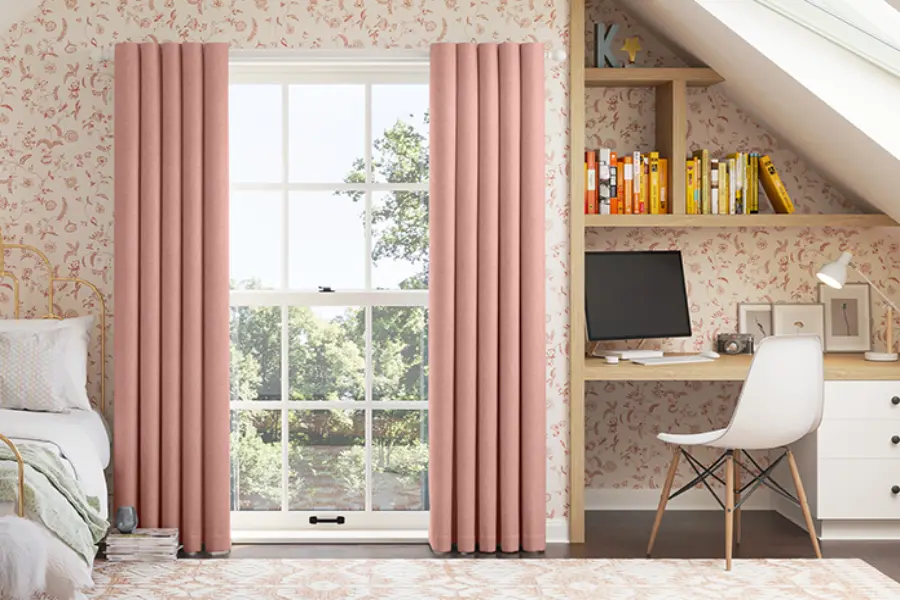
Rayon drapes are the all-rounders. They are beautiful, offer a luxurious feel, and a fluid drape. They have a silky smooth feel to them and enhance the vibe of your space manifold. These living room curtains have an airy feel due to their weave. They bring an eclectic charm and a bohemian beauty to a living room, specifically.
8. Polyester Curtains
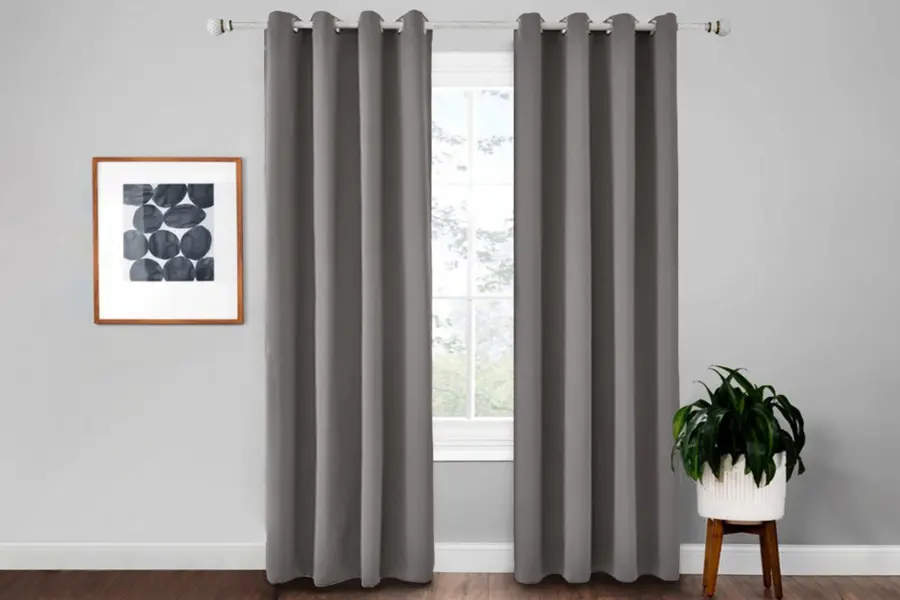
These curtains are the most durable and long-lasting. Polyester curtains are mainly used in spaces that require better durability and longevity. They have a clean and crisp look and offer a casual and traditional look. This fabric is the best at mimicking the feel of real cotton and linen. Polyester is a more affordable and modern alternative to cotton and linen drapes.
9. Damask Fabric For Curtains
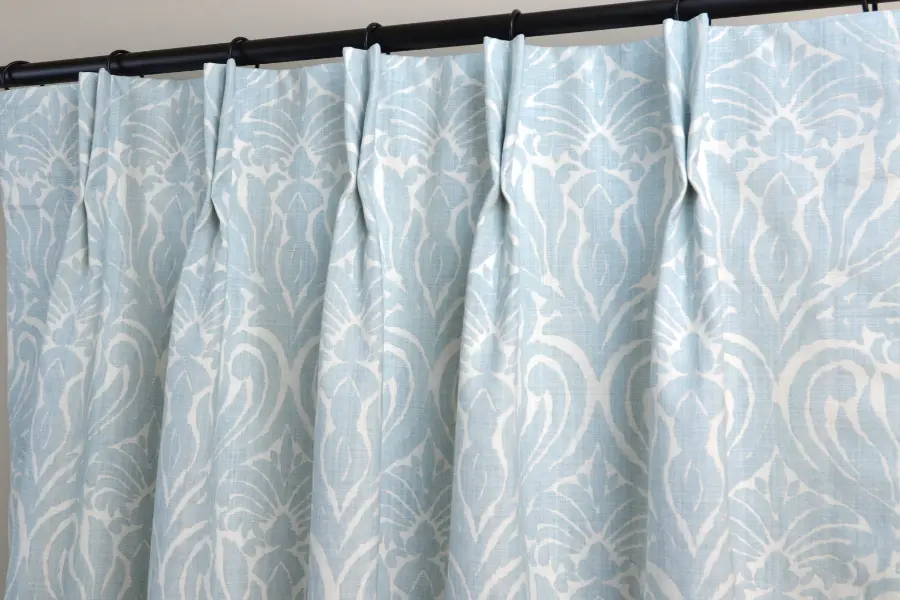
If you want a rich and luxurious look in your space to evoke a sophisticated and elegant look, Damask fabric is the one to go for. The curtains made from these fabrics are timeless, classic, and enhance the visual interest. They come in different patterns and colors — like vibrant red curtains to match the vibe of your regal space.
10. Woolen Curtains
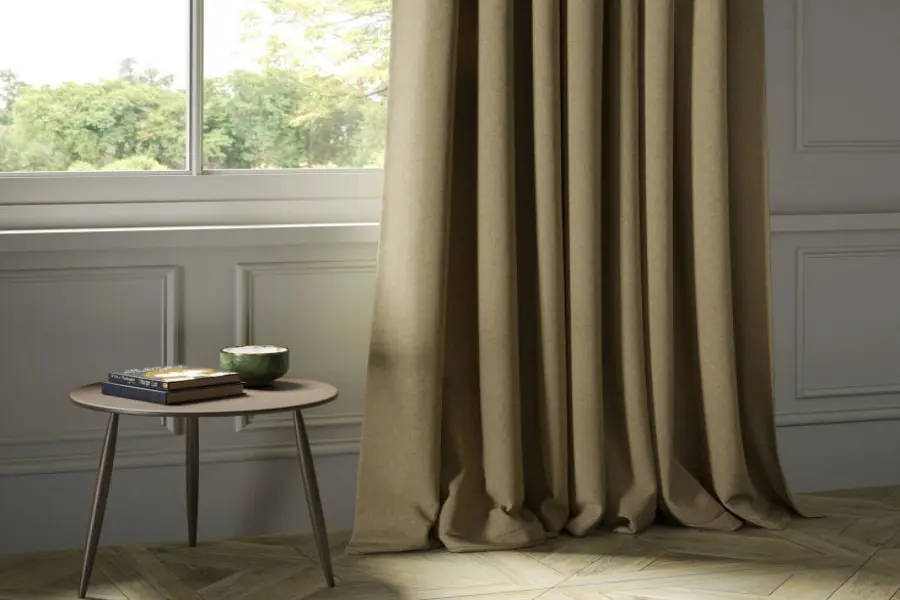
Wool is the most sought-after curtain material in the year 2026 — and there is a good reason for it. Wool has linoleum naturally, which is fire-retardant. This means that these curtains won’t catch fire in the most unfortunate of incidents. Moreover, they are also hypoallergenic — making them an ideal choice for a home with allergic people.
11. Brocade Curtains
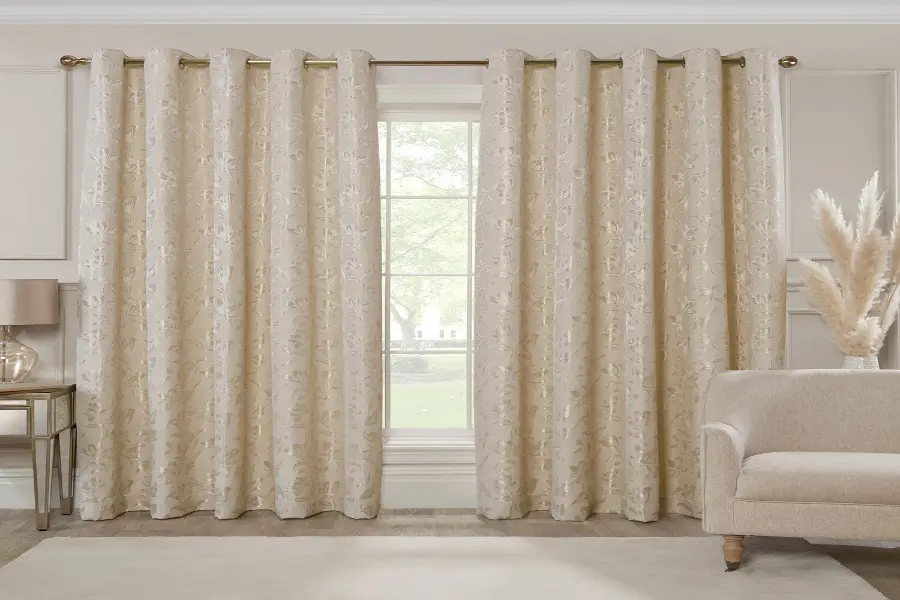
Curtains made from brocade would bring opulence, grandeur, and an authentic beauty to your space. They feature a universe of different patterns that showcase beautiful heritage and sophistication. Hang brocade curtains with intricate patterns to bring a classic and vintage charm to your space.
Factors To Consider When Choosing Fabrics For Blackout, Diffused Glow & Acoustic Comfort
In case you are still wondering how to select the curtains to achieve a complete blackout, a diffused glow, or acoustic comfort in your space, here is a quick guide. The following guide would provide different factors that you should take into consideration before buying the curtains for each individual effect you want.
| Factor | For Blackout Control | For Diffused Natural Glow | For Acoustic Comfort |
| Fabric Density | Very dense, tightly woven fabrics | Light to medium density | Thick, heavy fabrics with mass |
| Fabric Type | Blackout-lined polyester, velvet | Linen blends, voile, sheer cotton | Velvet, wool blends, suede |
| Lining Requirement | Essential (blackout or thermal lining) | Optional (light-filtering lining) | Acoustic or interlining recommended |
| Color Choice | Dark or mid-tone shades block more light | Light, neutral, or warm tones | Darker tones absorb sound better |
| Weave Structure | Tight weave prevents light leakage | Loose weave softens incoming light | Dense, textured weave reduces echo |
| Curtain Length & Fullness | Floor-to-ceiling with generous pleats | Slightly full for even light spread | Extra fullness improves sound absorption |
| Mounting Style | Ceiling-mounted or wall-mounted above the frame | Inside or above-frame mounting | Ceiling-mounted for maximum coverage |
| Layering Potential | Works best with double layers | Pairs well with sheers | Can be layered with blackout for dual benefit |
| Best Spaces | Bedrooms, media rooms, nurseries | Living rooms, dining areas | Home offices, bedrooms, apartments |
| Key Benefit | Maximum light blockage & privacy | Soft, ambient daylight | Reduced echo & improved room acoustics |
The Final Say — A Shot Overview!
The debate we started is finally coming to an end. In this guide, we talked about the 11 different fabric types that are going to be the most hyped up curtains’ fabric in the year 2026. We enlisted multiple types included silk, velvet, suede, brocade, hemp, and many others. These fabrics provide the best level of privacy, aesthetics, and functionality to your space.
Moreover, we discussed a couple of biodegradable and organic fabric options for people who prefer a green living style. To provide quick assistance in the selection process, we also tabulated the factors that should be considered before buying a curtain. Go with a suitable curtain fabric for enhanced privacy, a sheer effect, and better soundproofing in your space.